Emergency Leak Detection in Melrose, MA
A leak in the middle of the night, or a water meter that will not stop spinning, is a call to make now. Our 24/7 line is open for emergency leak detection in Melrose, and the steps below can limit the damage while you wait.
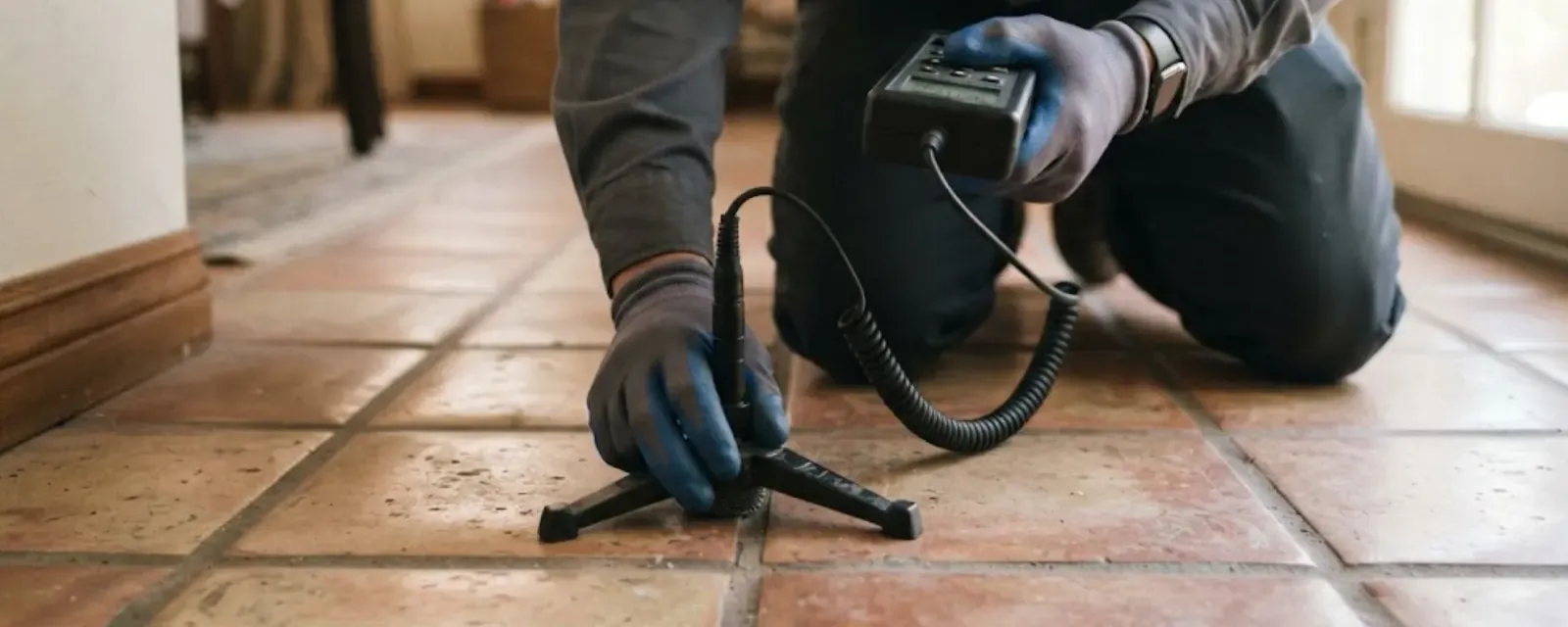
Leak detection is the work of finding exactly where water is escaping from a pipe, fixture or buried line. It relies on meter readings, sound and moisture tools, so nobody has to cut open a wall or dig up a yard on a hunch. If water is pouring out, close the main shutoff valve first, then call.
- 24/7 line
- 24/7 dispatch line
- Meter and bill checks
- Walls, floors and yards
Active leak or a meter that will not stop spinning
Some leaks announce themselves with a stain or a drip. The expensive ones stay quiet. A pinhole in a copper line behind a wall can lose hundreds of gallons a week before anyone sees a mark, and the first clue is often a water bill that makes no sense.
Call right away if water is pouring, the meter is racing with every fixture off, or you hear running water inside a wall or under a floor. Those are after-hours calls, and we treat them that way. A slow loss with no damage yet can usually be booked as a regular visit, and the ten-minute test below tells you which kind you have.
If a pipe has already failed and water is gushing, that is a burst pipe repair situation. Close the main, then call.
The water meter test you can do tonight
Melrose bills water quarterly, so a leak can run for weeks before a bill shows it. The meter is the faster witness, and it costs nothing to read.
- 1
Stop all water use
Shut every tap. Pause the dishwasher, washer, ice maker and any irrigation. Make sure nobody flushes a toilet, and check that no softener or filter is in the middle of a cycle.
- 2
Read the meter
The meter is often in the basement near where the line enters, or in a box outside. Look for the small triangle or wheel that spins when any water moves, and write down the numbers on the dial.
- 3
Wait 30 minutes
Leave everything off, then read it again. Any change in the numbers, or a wheel that keeps turning, means water is going somewhere you cannot see.
- 4
Close the main valve
Shut the main inside the house and watch the meter. If it stops, the leak is on the house side. If it keeps moving, the loss is upstream of that valve, often in the buried line from the street, or the valve itself is not sealing.
Photograph the meter before and after. Those two pictures tell the technician more than any description will.
Why the water bill jumped
Not every high bill is a hidden pipe. Rule out the cheap culprits first, because several of them take five minutes to check.
A toilet that runs silently
Drop a few drops of food coloring in the tank and wait 15 minutes without flushing. Color in the bowl means the flapper is leaking. A bad flapper can waste hundreds of gallons a day with barely a sound.
Irrigation and hose bibs
A stuck sprinkler zone or a dripping outdoor spigot can add up fast. If the bill climbs only in watering season, shut the irrigation valve and run the meter test again.
A weeping relief valve
Look at the pipe from the water heater's temperature and pressure valve. If it is wet or dripping, the valve or the heater needs attention, and it is a safety item, not just a waste.
A line you cannot see
If the toilets, taps and yard check out and the meter still moves, the loss is inside a wall, under a floor or in the buried line. That is when detection equipment earns its keep.
Because the city bills quarterly, compare this quarter with the same quarter last year, since use shifts with the seasons. If the reading on your bill does not match the meter itself, call the city's water billing office, and ask them directly about any leak adjustment policy rather than assuming one exists.
Basements, crawlspaces and slabs
People often search for a slab leak, which means a supply line running in or under a concrete floor. Many older homes have a basement or a crawlspace instead of a slab. That is good news for the search, because pipes usually run exposed along the joists, where they can be seen and heard.
Basement and crawlspace lines
Look along the underside of the first floor for drips, green crust on copper, rust trails on steel pipe and wet insulation. Run a dry paper towel along each pipe, since it picks up a slow weep that your eye will miss. In a crawlspace, wear a mask and gloves, and leave if you smell sewage.
True slab leaks
Additions, garages and some condo units sit on concrete, and their lines can run inside or beneath it. The signs are a warm spot on the floor, the sound of running water with fixtures off, damp flooring near a wall, and a meter that moves. Listening gear and thermal imaging can narrow the spot, so any opening in the floor is small and planned.
A wet basement that is not a pipe
Groundwater seepage, a failed sump pump, a sweating cold pipe and a weeping floor drain can all look like a supply leak. The meter test separates them. If the meter sits still with everything off, the water is coming from somewhere other than your supply pipes.
Leaks in walls and ceilings
Water travels. The stain on a ceiling is often several feet from the pipe that caused it, which is why guessing at the source gets expensive.
- Brown ring or sag in a ceilingUsually water collecting above, often under a bathroom, a kitchen or a laundry room. The drywall holds water until it gives.
- A wall that feels cold and dampA pressurized line may be weeping inside the cavity. Bubbling paint and a musty smell point the same way.
- Running water sounds with nothing onA hiss or trickle in a wall at night is a supply line, since drains only sound off when something drains.
- Pressure that fadesA slow loss on a supply line can cut pressure at the farthest fixtures before it shows anywhere else.
- A leak only when someone showersThat points to a drain, a trap, a tub waste or a tile problem upstairs, not a pressurized supply line.
Turn off power to lights and outlets near the wet area first. If a ceiling bulges, put a bucket under it and stay out of the room, and only poke a small hole at the lowest point to let it drain once the power is off. Then close the main or the valve for the fixture above and call.
Water on the move right now?
Close the main, then call the 24/7 line. Tell us where the water is showing up and what the meter is doing.
How a leak actually gets located
No single tool finds every leak. Technicians combine methods, starting broad and narrowing down.
| Method | Works best for | What it tells you |
|---|---|---|
| Meter and pressure test | First step on any suspected supply leak | Whether water is escaping and which side of the main valve it is on |
| Acoustic listening | Pressurized lines in floors, walls and soil | The point where escaping water makes the loudest noise |
| Thermal imaging | Hot water lines, radiant heat and slab floors | A temperature trail that shows where a hot line is losing water |
| Moisture meter | Drywall, plaster, subfloor and wood | How far the water has spread and whether it is still wet |
| Tracer gas | Buried or enclosed lines that sound and heat miss | A harmless gas escapes at the break and is picked up at the surface |
Drain and sewer leaks are a different hunt and use a camera. See our sewer inspection service for that.
Pinpointing first or opening walls first
Locate, then open
- Meter test and listening narrow the zone before anyone cuts
- One small access hole at the confirmed spot
- Less drywall, tile and flooring to replace
- You see the cause before you approve the repair
Open and hope
- Holes cut at the stain, which may be feet from the source
- Several rounds of demolition if the first guess misses
- More patching and paint afterward
- Water keeps running while the guessing goes on
Once the source is known, the same visit can move straight to repair when the fix is small, such as a failed fitting or a bad supply valve. Larger jobs get a quote first.
What affects the price of finding a leak
Before we arrive
Do the meter test
Have the two readings and your photos ready. They save time on site.
Clear the way
Move boxes from the basement wall where the meter and main valve sit, and from under affected ceilings.
Note the clues
Write down where you hear water, where it is damp, and when the bill changed.
Know your main
Make sure everyone in the house knows where the main shutoff valve is and that it turns.
Pets away from the work area, please, and keep children out of wet rooms.
Melrose water facts that help a leak search
Melrose buys its drinking water from MWRA, and the city's water division reads about 8,500 meters. The meter at your property is how the city measures what you use, so photograph it when your search starts. That reading is your own proof if you later ask the city about a bill.
Selling a home? The city schedules a final water reading, ideally at least 7 days before closing, and staff need access to the meter. If you suspect a leak, have it located before that reading so the final bill holds no surprise.
If the culprit turns out to be the buried line from the street, that is a water service line repair job. We also cover nearby homes, and we also take calls from Malden.
Source type: City of Melrose water division and MWRA published information
Commercial buildings and irrigation systems
Shops, restaurants and multi-unit buildings share the same signs: abnormal usage flagged by the water department, wet spots along a driveway or parking area, and floor drains that overflow. If you can, shut the isolation valve for the affected zone and block off any area where water is crossing a walkway. Our commercial plumbing work includes spot checks and a survey of the whole property.
Irrigation leaks are usually a soggy patch in an otherwise dry lawn or a bill that climbs only in summer. Turn the controller off and close the system's own valve, mark the wet spot with a flag, and call. Leave any locked utility valve alone.
Safety while you wait
Water and electricity do not mix. If water is near outlets, appliances or the panel, do not stand in it, and switch off the breaker only if the panel is dry and you can reach it safely. Stay out from under bulging ceilings, and leave a crawlspace if you smell sewage.
This page is about water. If you smell gas, leave the building and call 911 or the gas utility before you call a plumber.
Leak detection questions
Start with the meter test. With every fixture off, a moving meter means water is escaping. Other clues are the sound of running water in a wall, a musty smell, a warm floor spot, or a bill that jumped without a change in how you live.
Yes. The line is open 24/7, and a racing meter, water coming through a ceiling or a pipe spraying in a wall is treated as an emergency at any hour. Close the main while you wait and tell us what you see.
Often the zone can be narrowed with a meter test, listening gear and thermal imaging before anything is cut. A small access hole is sometimes still needed to confirm the spot, but it is far smaller than guessing.
It might be. Check toilets for silent running, shut off irrigation, and think about guests or a filling pool. Then run the meter test. Since Melrose bills quarterly, compare with the same quarter last year before deciding.
Yes, using listening equipment, thermal imaging and tracer gas where needed. If your home has a basement or crawlspace, the supply lines are usually reachable and easier to trace than lines in concrete.
Usually in the same visit when the repair is small, and with a quote first when it is larger. A failed section may call for burst pipe repair, and a badly corroded system may point toward repiping.
Yes. A meter test and a walk through the basement, under sinks and around the water heater catches most problems. Do it before the city's final water reading so a hidden leak does not inflate the last bill.
Find it once, fix it once
A leak you can pinpoint is a small repair. A leak you can only guess at keeps costing you water and drywall. Call the 24/7 line and we will start with the meter and work from there.
Call (339) 216-9771