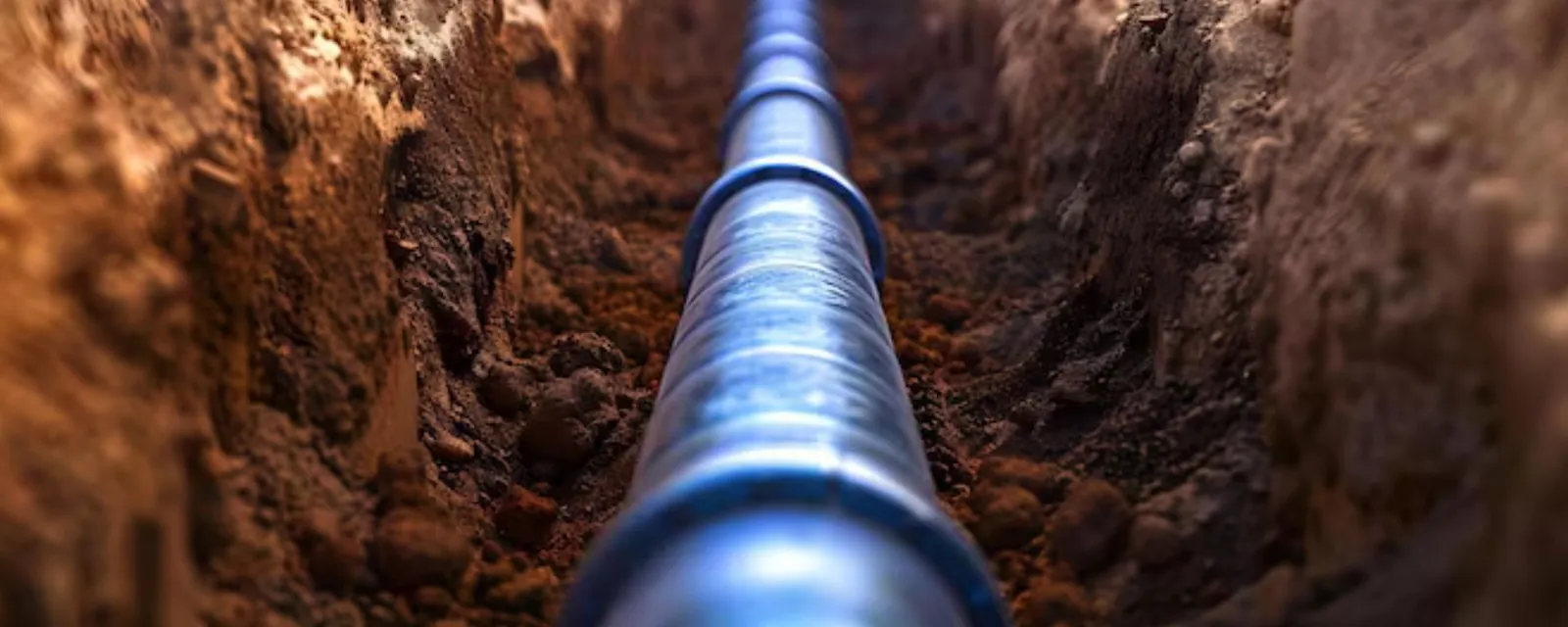
Emergency Water Service Line Repair in Melrose, MA
No water at every tap, or a swampy patch between the street and your foundation, usually means the service line has failed. Our 24/7 line takes emergency water service line repair calls in Melrose. While you wait, close the main valve inside the house and keep kids and pets off soft ground.
The water service line is the buried pipe that carries water from the main in the street, through the meter, into your home. When it cracks, corrodes or separates at a joint, you lose pressure, water or both.
- 24/7 line
- 24/7 dispatch line
- Leaks, breaks and lead lines
No water or a broken line from the street
Before you assume the service line is the problem, check the simple things. Ask a neighbor whether their water is off too, since a main break or city work can shut a whole block. Look at the meter and the main valve to confirm both are open.
If the neighbors are fine and your valves are open, the line is the likely cause. A partial break gives weak pressure and a wet yard. A full break can mean no water at all. Either one is worth a call tonight, because a leaking line also undermines the soil under driveways and walks.
Signs the line is leaking or broken
- A wet patch with no rainA soft spot or puddle along the path from the street to your house that stays wet for days.
- A meter that moves with everything offIf the main valve is closed and the meter still turns, the leak is upstream of the valve, in the buried pipe.
- Falling pressureShowers and taps slow down together, not just one fixture.
- Greener or sinking grassA strip of lush grass or a dip in the lawn over the pipe route.
- Water at the foundationDampness where the pipe enters the wall, often a cracked pipe or failed seal near the house.
- Running-water soundsA hiss near the meter or entry point when nothing in the house is on.
Run the meter test described on our leak detection page, and photograph the wet area and the meter reading before the repair starts.
Lost water or flooding the yard?
Close the main inside, then call the 24/7 line. We handle after-hours service line failures.
Who is responsible for which part
In general, the city owns the main in the street, and the homeowner is responsible for part of the line that runs onto private property. Where the split falls is local, so confirm it before you approve work.
| Section | Typical owner | What to do |
|---|---|---|
| Water main in the street | City or water utility | Report to the city, not a plumber |
| Connection and curb valve | Check with the city | Do not dig. Ask Engineering or DPW |
| Private-side line to the house | Property owner | Call us for repair or replacement |
| Meter and main valve inside | Ask the city about the meter | Do not remove the meter. Ask us about valves |
| Plumbing inside the house | Property owner | See burst pipe repair for failed pipes |
Melrose's code has a section on separate service pipes and their upkeep. Ask the city which parts of your line you own.
Lead service lines and the Melrose program
MWRA water leaves the reservoirs lead free, and the city says its own pipes are mostly iron and steel and add no lead. Lead can enter from a home's lead service line, lead solder or some brass fixtures. In the 2023 report, Melrose's 90th percentile for lead was 16.3 ppb against a 15 ppb action level. Check the city's latest water quality letter for current results.
Under a voluntary MassDEP consent order, Melrose must remove at least 25 complete lead service connections each year, and it completed 34 in 2023. The city also offers a $1,000 incentive to owners who replace a private-side lead service. Call the Melrose Engineering Division before you hire any replacement, since the incentive and the city's own schedule can affect how and when you do the work.
Until the line is checked, flush the tap 30 seconds to 2 minutes after water has sat for hours, and at least a minute if it sat more than 6. Take the aerators off every few months and run the water 3 to 5 minutes. The city says never use hot tap water for drinking or cooking, and never boil water to remove lead.
Source type: City of Melrose drinking water page and MWRA 2023 Melrose water report
How a service line repair goes
- 1
Confirm and locate
We verify the loss with a meter and pressure check, then pinpoint the break with listening equipment so we dig in one spot, not along the whole run.
- 2
Plan and notify
We mark the route, confirm utilities before digging, and coordinate any city sign-off or permit the work needs.
- 3
Repair or replace
A single break can be cut out and spliced. A corroded or lead line is usually replaced end to end with new pipe.
- 4
Test and restore
We pressure-test the new pipe, restore water, flush the line and refill the trench. Surface restoration is a separate item.
The city says sub-trade permits are granted only to licensed professionals, and Melrose plumbing permits are applied for online. Ask who is pulling the permit before work starts.
Digging a trench or going trenchless
Open trench
- Straight, visible access to the whole pipe
- Easiest for a short run or a single repair
- More lawn, walk or pavement to restore
- Shows lead or old steel clearly
Trenchless methods
- Pulls or pushes new pipe through the old path
- Fewer and smaller holes
- Less yard damage, good under drives and walks
- Not right for every pipe or soil
Which method fits depends on pipe condition, depth, and what sits above the line. We explain the choice and the surface work it leaves before you approve.
What drives the cost of a service line job
Safety near a failing service line
Stay off soft or sunken ground over the pipe route, since saturated soil can give way. Keep children and pets away from open trenches and from water pooling near the foundation. Never dig near the street connection yourself, because gas, electric and communication lines often run close to water lines.
If you smell gas, leave the building and call 911 or the gas utility first, before you call a plumber.
Water service line questions
Yes. The line is open 24/7. A line that has failed and left you with no water, or is flooding your yard, is dispatched as an emergency. Close the main inside the house and tell us where the water is showing.
Close the main valve inside and watch the meter. If it still moves, the loss is upstream of the valve, in the buried line. If it stops, the leak is inside the house, which a leak detection visit can trace.
Some older homes do. The city has done building inspections and test pits to confirm service line materials. For a lead question, contact the Melrose Engineering Division before replacing anything, and ask whether the city has any record of your service line material.
Yes when the rest is sound, such as repairing one break. For lead lines, a partial replacement can leave lead behind, so ask the city and your plumber how a replacement should be handled.
Locating the break first keeps digging to one spot for a repair. Trenchless methods cut the damage on longer replacements. Sod, pavers and paving are restored as a separate item that we price with you.
Ask a neighbor. If several houses are dry, call the city, since it may be a main break or planned work. If only you are dry and your valves are open, call us.
Call before you dig
A buried line problem feels bigger than it is once the break is located. Our 24/7 line is the place to start, and the incentive and permit questions get sorted before the trench opens.
Call (339) 216-9771