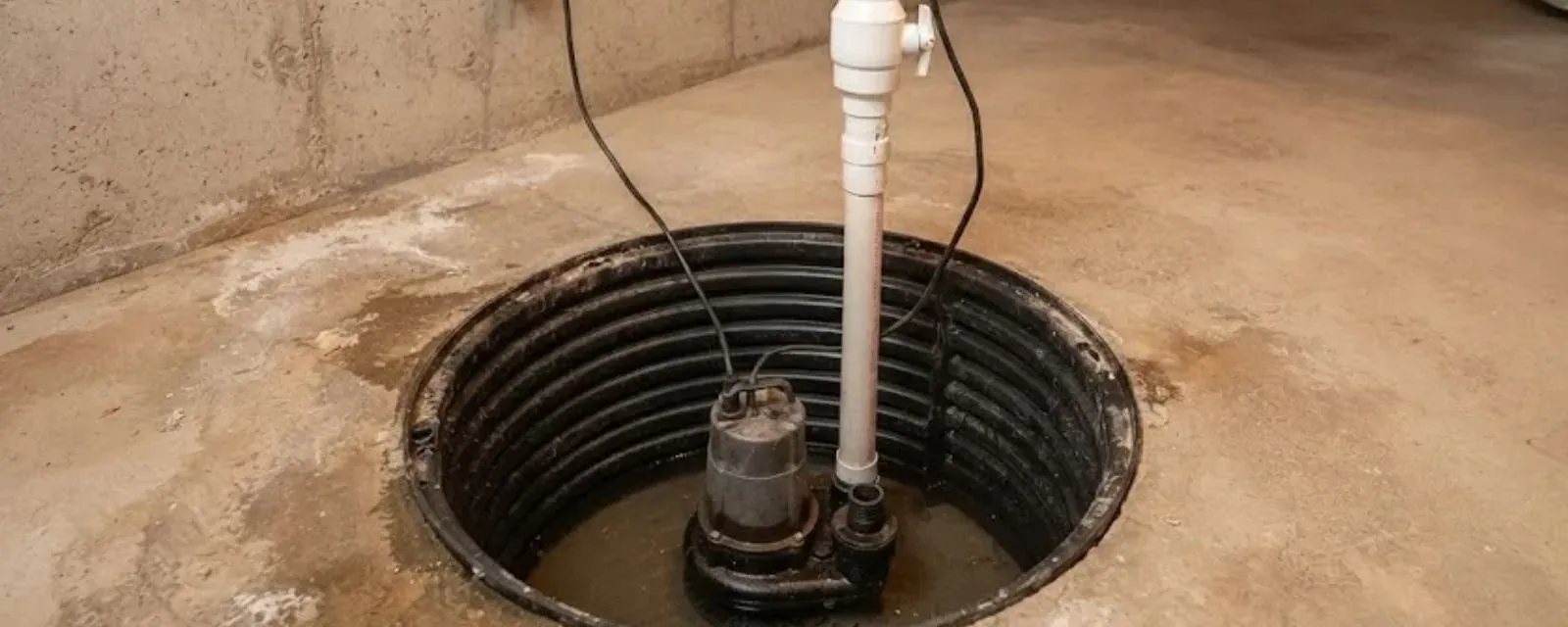
Emergency Sump Pump Repair in Melrose, MA
A sump pump that has stopped while water rises in the pit is a flooding emergency. Call our 24/7 line. While you wait, keep out of standing water near outlets or appliances, and turn off power to the area only if the panel is dry and reachable.
Sump pump repair means restoring a pump that removes groundwater from a basement pit. It also covers replacing the pump or installing a new one, along with the check valve, float and discharge line that go with it.
- 24/7 line
- Sump and ejector pumps
- Install or replace
Sump pump failed during a storm
Pumps fail when you need them most, because heavy rain is when they run hardest. A stuck float, a burned motor, a clogged intake or a power outage can all stop the pump while water keeps coming in.
Check the simple things first, but only if it is safe. Is the pump plugged in, and is the breaker live? If the pit is full and the pump hums without moving water, call. If water is near electrical equipment, stay out and call.
Water, power and the basement
Never step into standing water that touches outlets, a panel or appliances, even if you think the power is off. If the electrical panel is dry and you can reach it without crossing water, turn off the breakers for that area. If you cannot, leave it for the utility or an electrician.
Sewage ejector pits carry waste, so avoid contact and keep children and pets away. Open a window if there is a smell. Photograph the water level and damage for your insurer.
Sump pump or sewage ejector
Sump pump
- Removes groundwater and rain seepage from a pit
- Handles clear water and small silt
- Discharge goes outside or to an approved drain
- Uses a float switch to turn on
Sewage ejector
- Lifts wastewater from a basement bathroom or laundry up to the sewer line
- Handles solids
- Sits in a sealed, vented basin
- Failure can cause a sewage backup
Which one you have changes the repair and the urgency. A failed ejector can mean sewage, so read about sewer line cleaning if waste is coming up.
How a pump repair or replacement goes
- 1
Find the failure
The plumber checks power, float, switch, check valve and discharge to see whether the pump or something else stopped.
- 2
Clear the pit
Debris, silt and stones that block the intake or jam the float come out of the basin.
- 3
Repair or replace
A pump that still has life may need only a new float or valve. An old or burned-out pump gets replaced.
- 4
Test under load
Water goes into the pit to prove the pump turns on, empties the basin and shuts off cleanly.
Pump dead and water rising?
Call the 24/7 line. Tell dispatch how high the water is, whether you have power, and whether it is a sump or a sewage pump. The line is open 24/7.
Where the pump water goes
The discharge line decides whether your pump keeps working, and where it ends matters. The City of Melrose has spent more than $9 million on infiltration and inflow work which targets clean water getting into sewer pipes. For you, that means do not assume you can connect a sump discharge to the sanitary sewer.
The city's code, Chapter 228 (Water, Sewers, and Drains), has sections titled Separating surface water from wastewater and Discharge of clean water to sanitary sewers. Ask the city what they require before you connect or keep a sump discharge to the sewer.
If the answer is to discharge outside, a plumber can route the line away from the foundation so the water does not circle back to the pit. For help with drains outside the house, see drain cleaning.
Common pump types
| Type | How it sits | Good for |
|---|---|---|
| Submersible | Inside the pit, under water | Quiet operation and most homes |
| Pedestal | Motor above the pit, intake below | Easier to service, louder |
| Battery backup | Second pump with its own battery | Power outages during storms |
| Sewage ejector | Sealed basin with solids handling | Basement bathrooms and laundry |
Water-powered backups also exist, but they rely on water pressure and use more water. A plumber can say what suits your house.
What affects the price of a sump pump job
Before we arrive
Stay out of the water
If water reaches outlets or appliances, do not wade in.
Note the pump
Check the brand label if you can see it, and note how old it is.
Move valuables
Lift boxes and electronics off the floor if it is safe to do so.
Look for the cause
Tell us if the power was out, a breaker tripped or the pump hums without moving water.
Pump problems often show up alongside drain trouble. We also help in Malden and nearby towns.
Questions we hear
Yes. The line is open 24/7, including storms at night and on weekends. Tell dispatch how high the water is and whether you have power, and a plumber is dispatched. Any after-hours rate is quoted before work starts.
Rules on sump discharge to the sanitary sewer come from the city's code, which has sections on separating surface water from wastewater and on clean-water discharge to sanitary sewers. Ask the city before connecting.
Many last several years, and heavy use shortens that. A pump older than about ten years is worth replacing before a wet season, especially if it is the only one you have.
A stuck float, a failed check valve or a high water table can keep it running. A pump that never shuts off wears out and needs a look.
If outages happen during storms in your area, yes. A backup pump runs on its own battery when power fails and the main pump stops.
Yes. Sewage ejectors carry solids and sit in a sealed basin, so replacement includes the check valve and a vent connection. Tell us if waste is backing up.
Fix the pump before the next storm
A working pump, a clear discharge line and a backup for outages are the three things that keep a basement dry. Check yours before the next heavy rain.
Call (339) 216-9771