Sensor or shutoff valve: which one first
The two products solve different problems, and people often buy one expecting the other.
Leak sensors
- Small puck that sits on the floor
- Alerts your phone or sounds a chirp
- Cheap enough to place in many spots
- Cannot stop water on its own
Smart shutoff valve
- Installed on the main water line
- Closes automatically when it senses a leak or unusual flow
- Costs more and needs a plumber for the install
- Protects the whole house, including when you are away
If you can only buy one thing this month, buy sensors for the three spots below. If you travel often or have a finished basement, put the shutoff valve at the top of the list.
Which tool answers which question
| Question | Best tool | Limit |
|---|---|---|
| Is water on the floor right now? | Puck-style sensor | Only detects water where it sits |
| Is water running when nothing is on? | Meter test | Needs the house fully quiet for a few minutes |
| Can I stop the damage while I am away? | Automatic shutoff valve | Needs power and a working Wi-Fi or hub connection |
| Is a pipe leaking inside a wall? | Professional leak detection | Sensors usually miss it until water appears |
| Is a toilet running silently? | Dye test | Does not cover supply line leaks |
Where to place sensors
Put sensors where a failure is likely and where water would sit before anyone saw it.
- Behind and beside the water heater. Tanks fail at the seams, and a slow drip can spread under a basement floor.
- Under the kitchen sink. Supply lines, the dishwasher hose and the disposal all meet here.
- Beside the washing machine. Washer hoses burst under pressure, and the laundry corner is often unfinished.
- At the base of the toilet or under the vanity. Small leaks here rot subfloor before anyone notices.
- In the sump pit or low basement corner. This is the first place water pools if the pump fails or a pipe gives way.
Test each sensor when you install it by touching the probes with a damp cloth. Replace batteries on a schedule, such as when the clocks change.
The meter test you can do for free
Your water meter is the cheapest leak detector in the house. Turn off every tap, appliance and the ice maker. Find the meter, and look at the small leak indicator or low-flow dial, which turns when any water moves.
Wait fifteen minutes and check again. If the dial or the digits changed, water is moving somewhere. Close the main shutoff and check again to see whether the dial stops, which tells you the leak is on the house side of the valve.
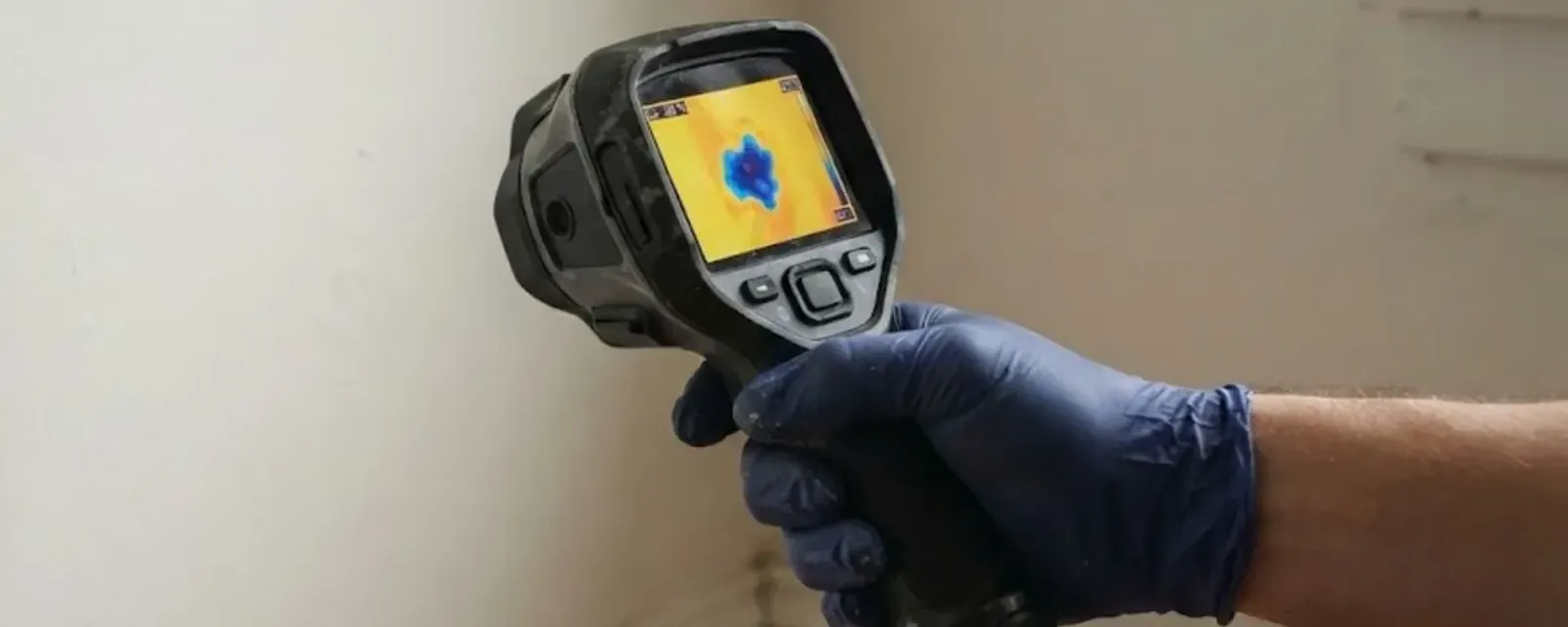
If the meter shows movement and you cannot find the cause, a pipe may be leaking under a slab or inside a wall. That is when leak detection with acoustic or thermal tools earns its fee.
Meter still moving?
If the meter turns with everything off, call the 24/7 line and tell us what you checked.
Melrose note: quarterly bills hide slow leaks
Melrose bills for water quarterly, and the city reads about 8,500 meters. That means a slow leak can run for weeks before a bill shows it, and by then you have paid for every gallon. A sensor or a meter check catches the problem in days, not months.
The city buys its drinking water from MWRA, so everything that passes your meter is metered supply you pay for. The meter usually sits near where the service line enters the house. Use it as your checkpoint any time a bill climbs without an explanation.
Source type: city website and MWRA annual water quality report
What sensors cannot do
A sensor does not know about a leak inside a wall until the water reaches the floor. It does not detect a pinhole in a supply line behind drywall, and it will not tell you which pipe is failing.
Sensors also depend on power and signal. Wi-Fi alerts fail if the router is down, and a chirping alarm is no help if nobody is home. If the house is empty for days, a shutoff valve is the only tool that acts without you.
When a burst happens anyway, the first move is the main shutoff. After that, burst pipe repair stops the damage at the source. The same checks apply in any older house, and we also serve Wakefield and Malden.
Choosing between sensor types
Battery puck sensors are the simplest. They sit flat, chirp when the probes get wet, and need no wiring. Wi-Fi models add phone alerts, which matter if you are at work or away for a weekend.
Cable sensors run along a length of floor, such as behind a water heater or a row of laundry hookups. They catch water earlier in a wide area than a single puck can. Some models also report temperature, which warns you before a pipe freezes in an unheated corner.
Plan for upkeep. Batteries die, probes corrode, and apps stop updating. Put a yearly reminder on your calendar to test every unit and replace anything that fails the damp-cloth check.
What a shutoff valve install involves
An automatic valve goes on the main supply pipe, usually just after the meter and the main shutoff. A plumber cuts into the line, fits the valve body and connects it to power and the sensors. The work takes a few hours in most basements, and the water is off while it happens.
Ask where the valve will sit and whether you can still reach the manual shutoff. Ask what the valve does during a power outage and how it reports a closure. A valve that closes and tells nobody leaves you without water and without an explanation.
A good installer also checks the pressure on the line. High pressure strains fixtures and hoses, and it is one reason supply lines burst in the first place.
Set up a basic leak watch in an afternoon
- 1
Find your main shutoff
Learn where it is and make sure the handle turns. Tag it.
- 2
Record a meter baseline
Photograph the meter dial with everything off.
- 3
Place and test sensors
Put them in the five spots above and test each with a damp cloth.
- 4
Decide on a shutoff valve
If you travel or have a finished basement, ask a plumber about an automatic valve.
- 5
Recheck the meter after a month
Compare it to the baseline with the house quiet.
Questions we hear
The local alarm still chirps, but remote alerts to your phone will not send. If you are away often, choose a model with a hub or cellular backup, or rely on an automatic shutoff valve.
Not until water reaches the sensor. For hidden leaks, ask for professional detection with acoustic or thermal equipment, or run a meter test to confirm that water is moving.
Compare your usage to the same quarter last year, then run the meter test with every fixture off. Melrose bills quarterly, so a leak can run a while before you see it.
Usually where the water line enters the basement, close to the meter. Check that it turns fully. A stuck valve is a common problem during an emergency.
If your house is empty for long stretches, or you have a finished basement, yes. It is the only product here that stops the water without a person present.
Do not count on it. Ask Melrose's water department what it offers if your bill looks off, and run the meter test yourself in the meantime.