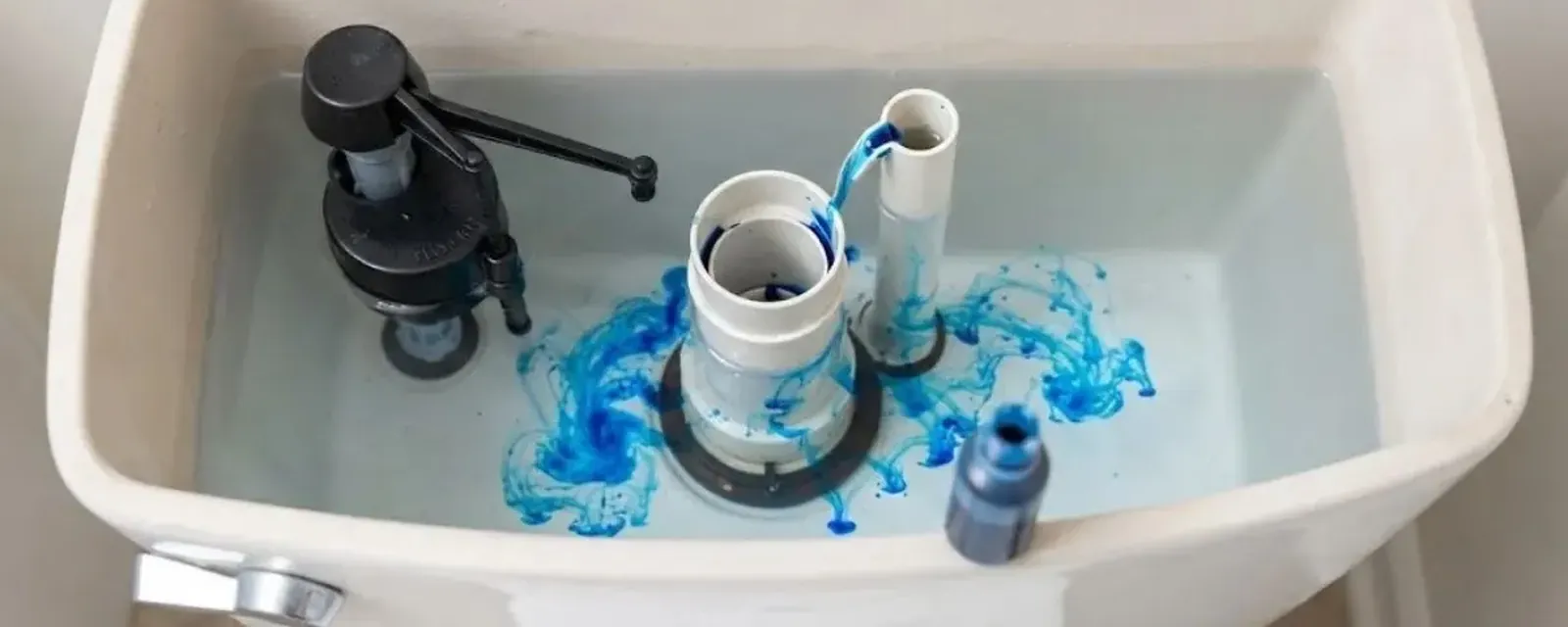
The dye test, step by step
- 1
Remove the lid
Set it somewhere safe. Look for water running over the overflow tube.
- 2
Add color
Drop in a few drops of food coloring or a dye tablet. Do not flush.
- 3
Wait 15 minutes
Leave the toilet alone. Do not use it.
- 4
Check the bowl
If color shows up in the bowl, the flapper or flush valve seat is leaking.
- 5
Flush and wipe
Flush, dry around the tank and bolts, then watch for new drips.
If the bowl stays clear but the floor is wet, skip to the table below.
What the symptom usually means
| What you see | Likely cause | Typical fix |
|---|---|---|
| Dye in the bowl | Worn flapper or dirty valve seat | Replace the flapper, clean the seat |
| Tank keeps refilling, hissing | Fill valve not shutting off | Adjust or replace the fill valve |
| Water drips from the overflow tube | Float set too high | Lower the float or replace the fill valve |
| Water at the base, only after a flush | Tank-to-bowl bolts or washers | Replace the bolts and rubber washers |
| Water under the tank all the time | Supply line or shutoff valve | Tighten or replace the supply line |
| Water at the base and the wax ring smells | Bowl seal failure | Reset the toilet with a new wax ring |
Fix the cheap parts first. A flapper or fill valve costs a small amount compared with the water a leak wastes.
Parts that fail first
Flappers are rubber and soften with age. A flapper that does not seal lets water slip into the bowl a little at a time, which makes the fill valve refill the tank over and over. You may hear the toilet turn on by itself.
Fill valves wear internally. If the float is set correctly and the tank still refills nonstop, the valve is done. Replacement kits are inexpensive, and a plumber can swap one quickly.
Tank bolts are the other regular culprit. The rubber washers harden, then water seeps along the bolt after each flush. Tighten gently, a quarter turn at a time, because porcelain cracks if you overdo it.
Water on the bathroom floor?
Shut the toilet's supply valve, turn the handle to the left, and call the 24/7 line if it keeps leaking.
Melrose note: billing and selling a house
Melrose bills for water quarterly. A toilet leaking into the bowl does not show on a bill until the quarter closes, so you can run up months of waste before you see the number. Run the dye test whenever a bill jumps, or twice a year as a habit.
If you plan to sell, the city asks owners to schedule a final water reading, ideally at least 7 days before closing. Staff must get into the property to read and inspect the meter, and a $25 meter read fee is added to the final water bill. Fix a leaking toilet before that day, so the final reading is not inflated by a silent leak.
Source type: city website
Repair it yourself or call a plumber
Do it yourself
- Dye test and flapper swap
- Float adjustment
- Replace a supply line
- Tighten bolts a quarter turn
Call a plumber
- Water at the base after you replaced the bolts
- Cracked tank or bowl
- Wax ring or flange problems
- Rusted or stuck shutoff valve
Plenty of tank leaks are easy to fix. Call when the problem involves the floor, the flange or the shutoff valve, because those fixes can cause bigger leaks if rushed. Our toilet repair and installation team handles all of them.
When it is not the toilet
If the dye test is clean and the meter still moves with everything off, the leak is elsewhere. A supply line, a hidden pipe or an irrigation line could be responsible. In that case leak detection can trace it without opening walls.
The same pattern shows up in older homes across the area. A toilet is a common cause of an unexplained jump in a water bill. We also serve Saugus and Malden.
How to replace a flapper
Shut the supply valve at the wall and flush to empty the tank. Unhook the old flapper from the ears on the overflow tube and the chain from the handle arm. Take it with you to the store, because flappers come in more than one size and shape.
Clip the new flapper on, attach the chain with a little slack, and turn the water back on. Run the dye test again. If color still shows in the bowl, wipe the flush valve seat with a cloth, because mineral film or a nick in the seat can stop a new flapper from sealing.
A chain that is too tight holds the flapper open a crack, and one that is too long can slip under it. Aim for about half an inch of slack.
What a silent leak costs on a quarterly bill
A silent leak has no sound and no puddle, so it runs until someone reads a bill. With a quarterly cycle, one missed leak can cover a full billing period before you learn about it. The number on the bill is the first sign, not the first day of the problem.
Compare your bill to the same quarter last year. If usage is up and nothing changed in the household, do the dye test and the meter check. Fixing a flapper takes minutes, and finding it early keeps the next bill from repeating the surprise.
If you rent out a unit, ask tenants to report running toilets quickly. A quick note costs nothing, and a quarter of waste does.
Fill valve and float adjustments
If the tank refills too high, water spills into the overflow tube and the fill valve hisses. Most valves have a float cup or a screw you can turn to lower the water level. The water line should sit about an inch below the top of the overflow tube.
Adjust a little at a time and flush between changes. If the valve still will not shut off, replace it. The kits fit most standard tanks, and the swap takes a short visit.
Quick checklist after the repair
- Run the dye test again. Wait 15 minutes. The bowl should stay clear.
- Dry the floor and check after each flush. Slow drips show up only with time.
- Check the supply line connection. Hand-tight plus a small turn is enough.
- Photograph the meter. Compare it in a few days with the house quiet.
- Note the date. Put the repair on your calendar so you can compare your next bill.
Questions we hear
A toilet that runs constantly can waste hundreds of gallons a day, and a silent flapper leak wastes less but never stops. The exact amount depends on the leak, which is why the meter test matters.
Melrose bills quarterly, so a leak may not show until a bill arrives. Ask the water office what it offers if your bill looks off. Run a dye test whenever usage looks higher than normal.
It can affect the final water bill. The city schedules a final water reading when you sell, and a leak would be included in that reading. Fix it beforehand.
That is called phantom flushing. It means the flapper is letting water into the bowl, and the fill valve tops the tank up. Replace the flapper first.
No. Chemical tablets can degrade rubber parts and make flappers fail sooner. Skip them if you are chasing a leak.
Replace it when the tank or bowl is cracked, repairs keep failing, or the toilet clogs often. A new low-flow model can also lower your water use.