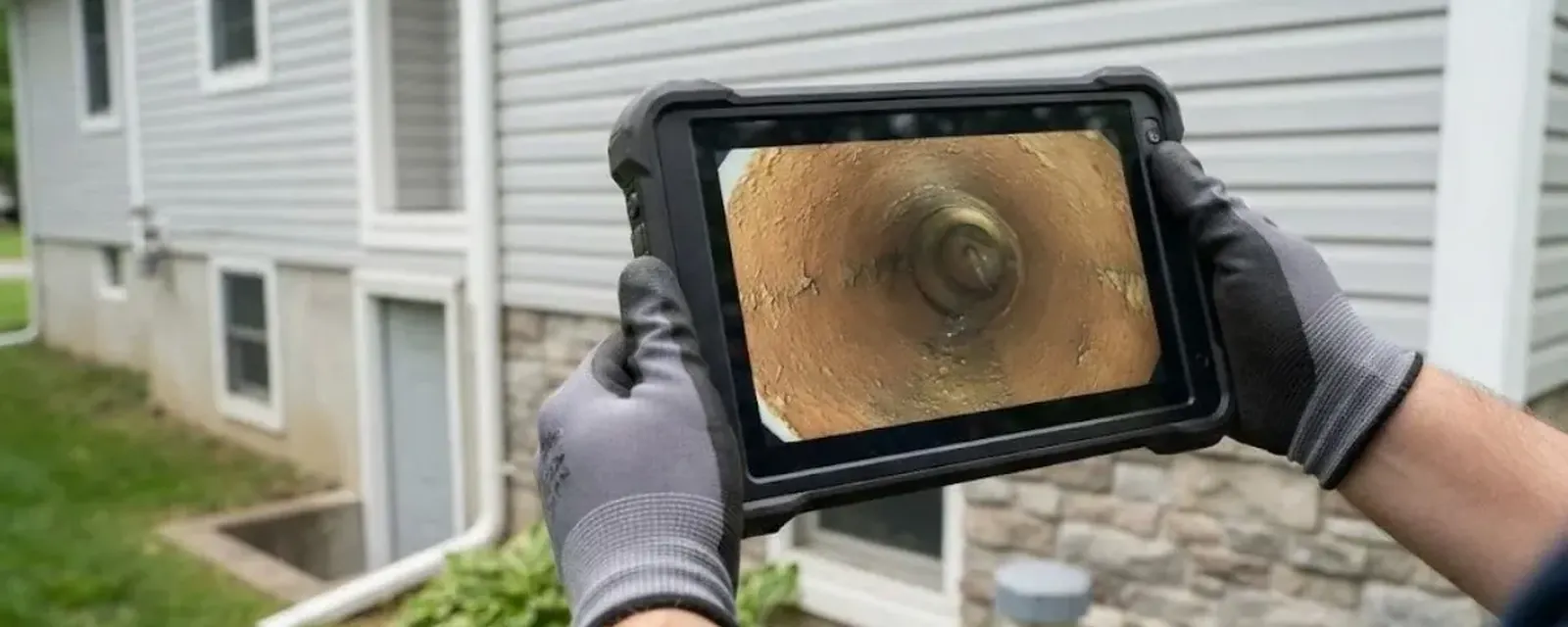
What the camera actually shows you
The technician feeds the camera from a cleanout, a pulled toilet or a basement drain and pushes it toward the street. The monitor shows the pipe wall in real time, and a recorder saves the run. Most crews can tell cast iron from clay, plastic or Orangeburg by sight, and they can read the joints.
Common findings include roots entering at joints, offset or separated pipe sections, cracks, scale buildup in old cast iron, low spots where water pools (a belly), and grease or debris buildup. The camera cannot see through a full blockage, so heavy clogs often need cleaning first. That step can add to the bill but gives you a usable picture.
When you get the video, watch the first few feet yourself. Ask the technician to pause on each defect and say how serious it is, and whether it is something to monitor or something to fix this year. A good report separates the two so you do not overspend on a cosmetic crack.
What drives the price
No two lines are alike. These are the factors that move a quote up or down.
Want a camera run on your line?
Describe the symptom and the age of the house, and we will explain what the inspection involves before we book it.
When a camera inspection pays for itself
| Situation | Why a camera helps | What you do with the result |
|---|---|---|
| Buying an older house | Hidden pipe damage is invisible at a showing | Use the video to negotiate or plan a repair |
| Selling your home | Lets you fix surprises before a buyer's inspector finds them | Share the report with the buyer's side |
| Repeat slow drains | Shows whether it is roots, a belly or a collapsed section | Pick between cleaning and repair |
| Gurgling toilets or a damp spot in the yard | Pinpoints the broken section | Plan a targeted sewer line repair |
| Large trees near the line | Roots enter at joints long before backups | Schedule recurring cleaning if needed |
If the video shows a clean, intact pipe, you have a baseline and a record. That alone can be worth the price when you are buying an older house.
Older homes can have aging clay and cast iron laterals, so the same table applies if you are shopping on either side of the line. We also serve Malden and Saugus.
Melrose note: the city's own sewer camera work and the sale process
Melrose has 74 miles of sewer mains, and the city reports about 57 percent of them, plus 500 manholes, have been inspected with cameras as part of its infiltration and inflow work. That program covers the public main in the street. Your private lateral, the pipe from your house to the main, is a separate question, so ask the city who is responsible for which segment on your lot before you plan a repair.
If you are selling, the city asks the owner to schedule a final water reading, ideally at least 7 days before closing. Staff need access to the property to read and inspect the meter, and a $25 meter read fee is added to the final bill. A camera run and the meter visit can be planned in the same week so nothing delays the closing.
Source type: City of Melrose water and sewer web pages
Before the technician arrives
Find the cleanout
Look near the main stack in the basement or outside along the foundation. Clear the area so the crew can set up.
Skip the heavy flushing
Do not run large loads of water right before the visit. Let the line settle.
Note symptoms and dates
Which drains gurgle, when backups happened, and any earlier repairs help the tech read the footage.
Have the house plans or age
Pipe material often follows the year built. It helps to know what to expect.
Ask for a copy of the video and a written note on defect locations. You will want both for repair bids.
Do not skip the next step
A camera finds the problem. It does not fix it. Get at least one repair plan in writing, with the scope, whether it is a spot repair or a full replacement, and who pulls any needed permit. Licensed plumbers apply for plumbing permits in Melrose, so that part of the work should not fall on you.
If the camera run finds a collapse or a major belly, sewage backup can follow. Keep sink and tub use light until the repair is done, and call the 24/7 line if water starts backing up.
Questions we hear
Ask the city or your attorney whether any sewer inspection is required when you sell. A voluntary camera run is still a smart way to avoid surprises.
A straightforward run on a short line often takes under an hour once the crew has access. A blocked line, a long run or locating work adds time.
Yes, with a locator. The camera shows the defect on the monitor, and the locator marks its position and depth on the ground so a repair crew knows where to dig.
No. The video shows the pipe's condition and where the defect sits. Who is responsible for that section is a separate question for the city, so bring them the footage.
Often yes before you buy, since builders can leave debris or poor joints. On a newer house with no symptoms, a periodic check is optional.
The tech may clean it first with a cable or a hydro jet, then rerun the camera. That adds to the cost but gives you a usable picture of what was causing the blockage.