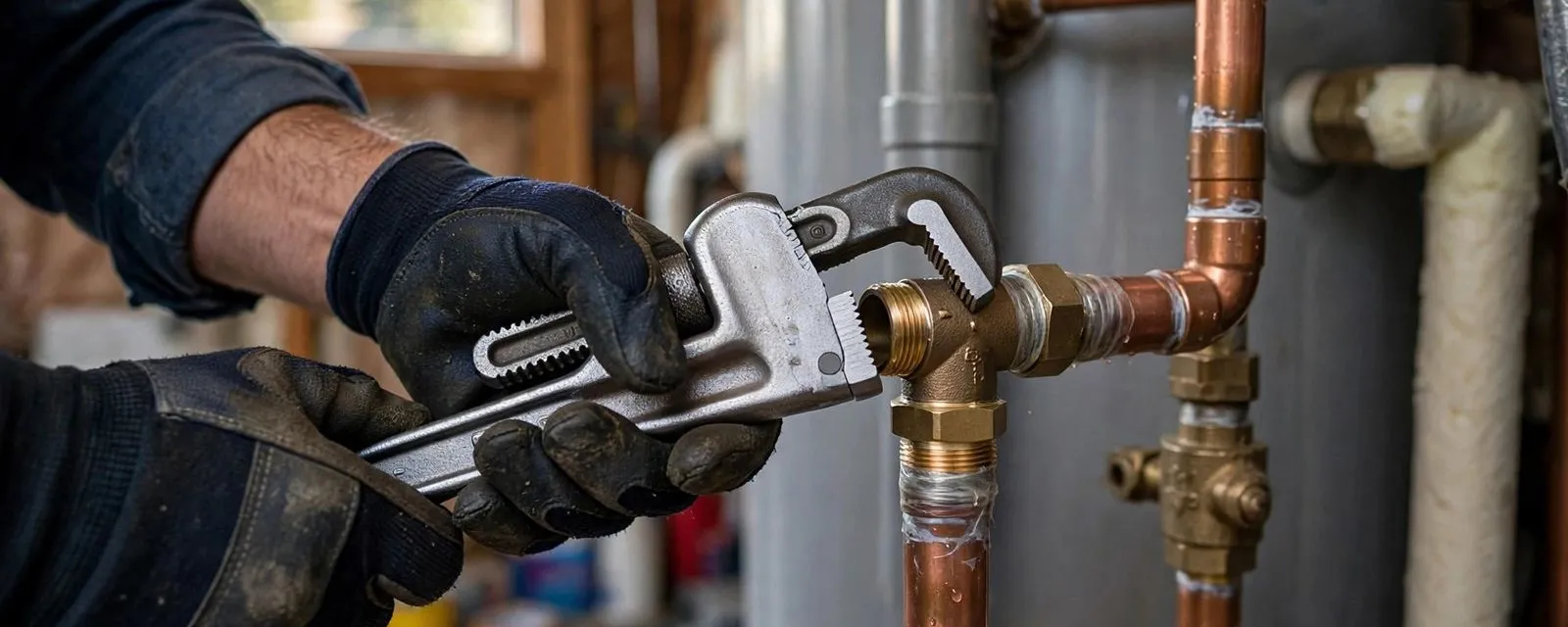
Copper pipe versus flex connectors
These are the two connections you will hear about most often when a water heater is swapped.
Hard copper
- Long service life when joined correctly
- Rigid, so the tank must line up with the piping
- Joined by solder or press fittings, both need skill
- Neat result that handles heat well
Braided stainless flex connectors
- Fast to install and tolerant of small misalignment
- Must be listed for potable water and rated for the temperature
- Shorter life than copper, and kinks restrict flow
- Good fit for tight spaces or where the tank may need to move
Neither is wrong. A careful installer chooses based on the room, not habit.
Where PEX fits, and where it does not
PEX tubing is flexible and common in new work, and it is easy to run long distances. Many heater manufacturers do not want PEX connected straight to the tank. They call for a short section of metal pipe or a listed connector between the tank and the plastic, which protects the tubing from heat at the fittings.
If your home is piped in PEX already, expect a copper stub or flex connector at the heater. If you are thinking of changing old supply lines throughout the house, that is a different project, covered under repiping. A tank swap alone rarely justifies it, but old, corroded supply lines are worth noting while the walls are open.
Connection options at a glance
| Option | Pros | Watch for |
|---|---|---|
| Soldered copper | Proven, long life, low parts cost | Needs open flame, so clearance and fire safety matter |
| Press-fit copper | No flame, faster in tight spaces | Needs the right tool and fittings, and cost is higher |
| Stainless flex connector | Quick, forgiving, good for movable tanks | Check listing, temperature rating and replace per manufacturer |
| PEX with metal stub | Easy to route to the heater | Metal stub required near the tank per many manuals |
| Dielectric union or nipple | Separates dissimilar metals | Use where steel meets copper, not as a decoration |
General comparison. Your manual and the plumber's judgment govern the actual job.
Soldering is not better than pressing, or the other way around. Soldering has a long track record, and pressing removes the flame risk in a finished basement or near wood framing.
Want the connections done right?
Tell us the heater type and the pipe you have now, and we will plan the connections before we show up.
Parts that matter more than they look
Dielectric fittings
When steel heater threads meet copper pipe, the two metals can corrode each other. A dielectric union or nipple breaks that path. Many tanks now ship with them, and an installer will confirm what you have.
Shutoff valve
A full-port ball valve on the cold inlet is a small upgrade that pays off the next time something leaks. If the old valve is a stiff gate valve, replace it now.
Expansion tank
If your system is closed by a backflow or check valve, thermal expansion needs somewhere to go. An expansion tank handles that and protects the relief valve from constant cycling.
Relief valve and discharge pipe
The T&P valve and its drain line must be installed to the manual. Never cap it or reduce the pipe size.
If your plumber is working on a tank replacement and wants to talk about these four items, that is a good sign.
Melrose note: permits, inspections and your water
The City of Melrose fee schedule lists a water heater at $40 and a residential gas water heater at $40, plus a $15 administration fee per application. Work started without a permit is charged triple, a reinspection is $50, and after-hours inspections are $400 for the first 2 hours. Plumbing and gas permits are applied for online and staff review can take 2 to 3 weeks, so ask your plumber to start the application early.
Plumbing and gas inspections happen Monday through Thursday, with none on Friday, and are scheduled by phone between 12 pm and 1 pm on the day wanted. The printed permit must be posted at the job site. Permits go only to licensed professionals, so a plumber should pull it. Your water is MWRA supply, which is pH-adjusted to reduce corrosion, but that does not prevent galvanic corrosion at dissimilar metals, which is why the dielectric fitting still matters.
Source type: City of Melrose permit fee, online permit and inspection scheduling pages, MWRA annual water quality report
How a typical swap goes
- 1
Shut off and drain
The water, gas or power goes off and the tank drains to a floor drain or hose.
- 2
Disconnect the old unit
Unions, connectors, vent and the relief discharge come off. Corroded fittings are noted.
- 3
Set the new heater and connect
The tank is leveled, the connectors or copper are fitted, and dielectric fittings go in where metals meet.
- 4
Fill and check
Open a hot tap to purge air, then check every joint for weeping before powering on.
- 5
Inspect and finish
Any permit the city requires is posted and any needed inspection is booked. Gas models get a combustion and venting check.
Ask your plumber to walk you through the shutoffs before they leave. It takes two minutes and could save a flood later.
A note on doing it yourself
The city states that sub-trade permits are granted only to licensed professionals, and that an owner who hires a contractor under an owner permit may not be protected by the Home Improvement Guarantee Fund. For a gas heater especially, a licensed plumber handles the permit, the venting and the gas connection together.
If you are comparing quotes, line up the same scope: connectors, shutoff, expansion tank, permit, haul-away. For help with the whole job, see our water heater replacement page. We also serve Malden and Saugus, though permit rules are set by each municipality. We also serve those towns.
Questions we hear
The city does plumbing and gas inspections Monday to Thursday, with none on Friday. They are booked by phone between 12 pm and 1 pm on the day you want. Your plumber usually handles the booking, but you should know the schedule so you are home.
Listed stainless connectors rated for potable water and the temperature are widely used. The manufacturer's instructions and the plumbing code, applied by a licensed plumber, decide for your install. Ask your plumber which they plan to use and why.
Not always. When steel threads meet copper, one is recommended. Many heaters ship with dielectric nipples already, so check before adding a second.
Both make sound joints when done right. Soldering needs open flame and clearance, while press fittings avoid it and work well in finished spaces. Ask which your plumber is set up for.
Many manuals call for a short run of metal pipe or a listed connector first. Follow the manual and your plumber's advice, as heat at the fitting can damage plastic over time.
Often several years but fewer than copper, and manufacturers list replacement intervals. Look for a date on the package and replace them when you replace the heater.