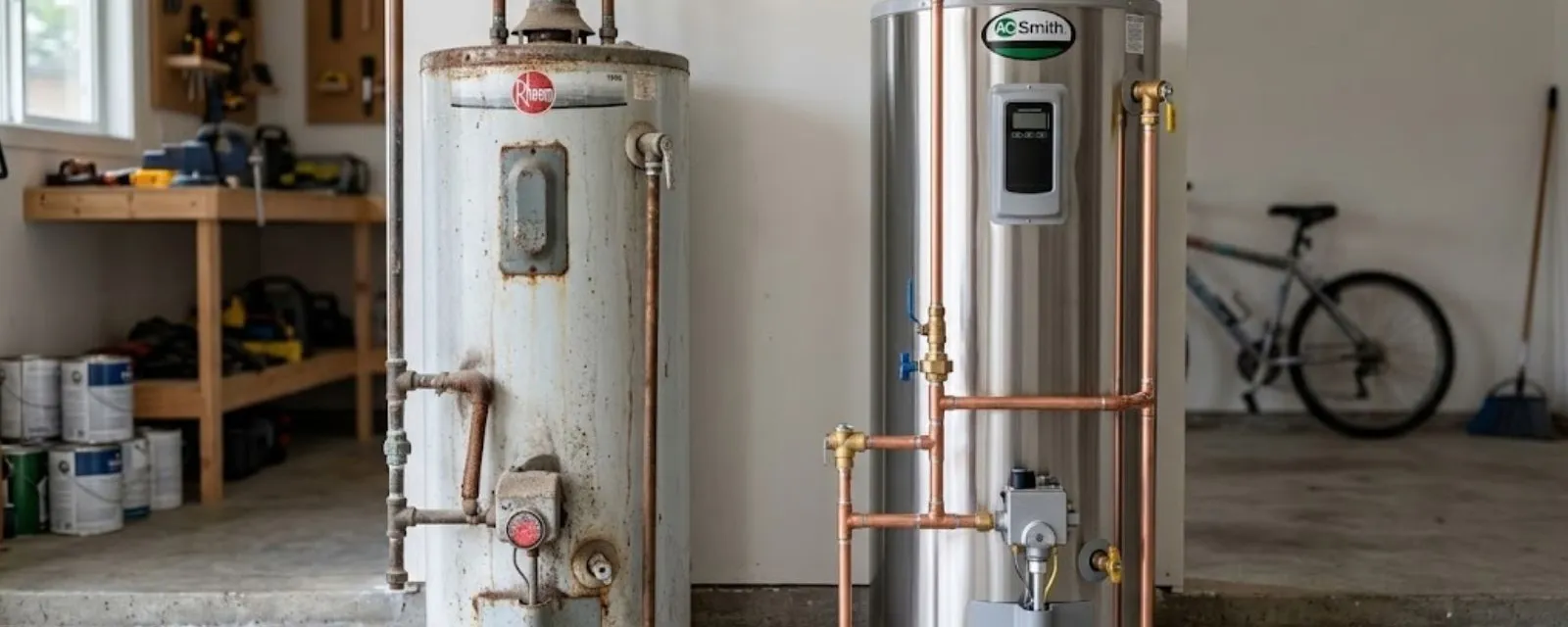
The short answer for a homeowner
Disconnecting a tank is the easy part. Getting a gas connection leak-free, a vent drafting correctly, a relief valve discharging to a safe place, and the whole job inspected is the hard part. Mistakes there do not show up as a drip. They show up as gas odor, flue gas in the house, scalding water, or a tank that fails under pressure.
What makes each part of the job risky
Here is where DIY water heater swaps go wrong.
| Part of the job | What can go wrong | Why it matters |
|---|---|---|
| Gas connection | Loose fitting or no leak test | Gas leak and fire risk |
| Venting | Wrong slope, size or loose joint | Carbon monoxide can enter the home |
| Temperature and pressure (T&P) valve | Missing, plugged or poorly piped discharge | Tank can fail dangerously under heat or pressure |
| Drain pan and drain line | No pan or no path for leaks | Water damage to the floor below |
| Expansion control | Missing expansion tank on a closed system | Pressure spikes, valve weeping, short tank life |
| Water connections | Dielectric mismatch, flex line kinks | Leaks and corrosion |
| Permit and inspection | Work done without a permit | Fees triple |
Each row is a separate skill. A professional checks all of them on every job.
Before the plumber arrives
A few minutes of prep makes the job go faster.
Clear the area
Move boxes and anything stored within a few feet of the heater. The installer needs room to work and to remove the old tank.
Find the main shutoffs
Know where the water shutoff, the gas shutoff, and the electrical breaker for the heater are.
Plan for no hot water
Fill a pot or two for the morning. Many installs take part of a day, and the tank must be filled and heated.
Note your tank details
Photograph the label with size, fuel type and age. It helps the plumber bring the right parts.
If you smell gas, do not touch switches. Leave the house and call the gas utility or 911 first.
What a professional does, in order
This is the typical sequence for a tank replacement.
- 1
Shut off and drain
Fuel and water are shut off, power is isolated, and the tank is drained to a floor drain or outside.
- 2
Remove the old unit
Flue, gas line, water lines and T&P discharge are disconnected, and the tank is hauled out.
- 3
Set and connect the new one
Pan, tank, vent, gas and water lines go in. New flex connectors and valves are usually part of the job.
- 4
Pipe the safety devices
The T&P valve is fitted with a full-size discharge pipe that ends in a safe spot, and an expansion tank is added where needed.
- 5
Test and inspect
Gas joints are leak tested, the vent is checked for draft, the tank is filled and fired, and any inspection the city requires is booked.
Where space and fuel allow, many homeowners compare a standard tank to a tankless unit during this decision. That changes the scope of the job and the price.
Water heater failing or leaking?
Tell dispatch what type of heater you have and what is happening. We can plan a replacement or a repair and tell you what to expect.
Melrose permits and inspections for water heaters
Melrose Inspectional Services, on the ground floor of City Hall, issues plumbing and gas permits. The city's fee schedule lists a $40 water heater plumbing fee and a $40 residential fee for a gas water heater, plus a $15 administration fee per application. A reinspection costs $50, and work started without a permit is charged triple.
Permits are applied for online through the city's SimpliCity portal. The city says staff review can take 2 to 3 weeks depending on volume, the printed permit must be posted at the job site, and sub-trade permits are issued only to licensed professionals. Plumbing and gas inspections run Monday to Thursday and are scheduled by phone between noon and 1 pm on the day wanted. After-hours inspections carry a separate fee. Ask your plumber how permit timing works for an urgent replacement.
Source type: city website
What affects the price of a replacement
Prices vary by home and by tank, so here are the factors rather than a quote.
How long it takes and what else to consider
A like-for-like tank replacement is commonly done in a few hours once the installer is on site. Venting changes, new gas piping or a tankless conversion take longer. Time to heat a full tank is extra, so plan for hot water to return later the same day rather than immediately.
If you want a fuller picture of the work, see our pages on water heater replacement and water heater installation. The same list applies to older houses in nearby towns, and we also serve Malden and Wakefield.
Questions we hear
The city says plumbing and gas sub-trade permits are applied for and granted only to licensed professionals. Owners of single and two-family homes may apply for a building permit for their own work. Ask Inspectional Services what applies to plumbing or gas work in your case.
A standard swap often takes a few hours. Add time for heating a full tank. A change of fuel, new venting or relocation can make it a full-day job.
Not always, but the vent must be the right size, slope and material for the new unit. An installer checks the flue for corrosion, gaps and draft. A bad vent is a carbon monoxide risk, so it is not a place to save money.
It is the temperature and pressure relief valve. It opens if the tank gets too hot or the pressure is too high. It needs a discharge pipe to a safe spot, and it should never be capped or plugged.
The city lists a water heater fee and charges triple for work started without a permit. Ask Melrose Inspectional Services whether your job needs a permit and who files it, and ask your plumber to confirm.
If the tank is old, leaking at the base or rusty at the fittings, replacing it on your schedule beats an emergency at night. A planned job lets you compare options and time the permit.