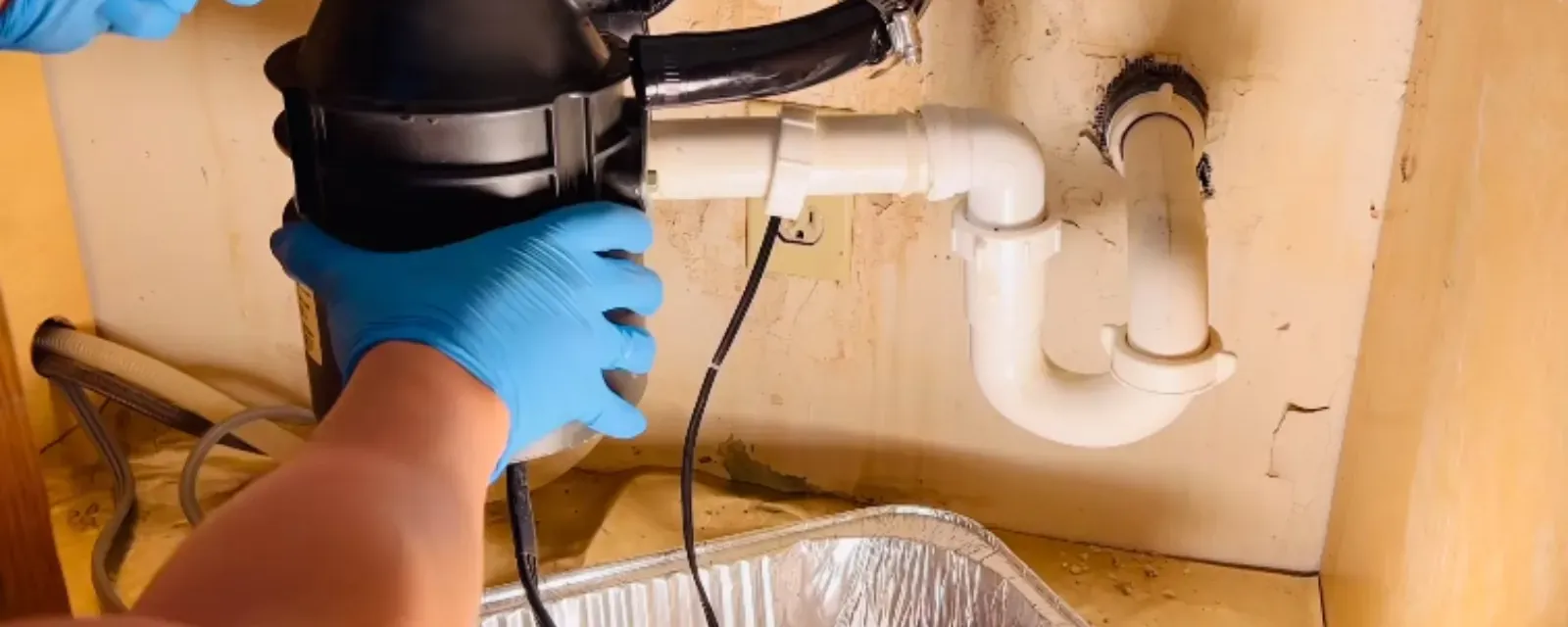
Swap or new install: the first decision
Start by looking under the sink. If a disposal is already there, you are replacing a known setup. If there is only a plain drain, you are building a new one.
Swap an existing disposal
- Power is already wired or plugged in at the sink cabinet
- Drain outlet and dishwasher hose are already in place
- Mounting ring usually matches within the same brand
- Most work is lifting, twisting and reconnecting
First-time install
- May need a new outlet or switched circuit
- Sink flange and trap often need reworking
- Dishwasher hose needs a high loop or air gap
- A mistake can mean a leak inside the cabinet for weeks
If your situation reads like the second column, hire the job out. The electrical part is the one most likely to be done wrong by a first-timer.
DIY or plumber: a quick decision table
Match your situation to the row that fits best.
| Your situation | DIY practical? | Why |
|---|---|---|
| Same-brand disposal swap, plug-in cord | Usually yes | Mounting ring and connections already exist |
| Different brand, hard-wired | Maybe | Wiring needs to be shut off at the breaker and done correctly |
| No disposal now, outlet under sink | Maybe | Plumbing changes still needed |
| No disposal, no outlet, no switch | No | Electrical work is added, often needs a licensed electrician |
| Double-bowl sink with dishwasher | Caution | Trap arm and drain layout may need to be rebuilt |
| Disposal leaks at the flange | Often yes | Reseating the sink flange is sometimes enough |
This is a general guide. If you are unsure about electrical work, stop and call a professional.
How a safe disposal swap goes
These are the steps for replacing an existing unit. Skip none of them.
- 1
Cut the power
Unplug the unit or turn off its breaker. Confirm with a tester or by trying the switch. A disposal that spins during removal causes injuries.
- 2
Disconnect the drain and hose
Put a bucket under the trap. Loosen the drain outlet and the dishwasher hose clamp. Expect old water.
- 3
Release the mounting ring
Support the unit with one hand, then twist the ring to unlock it. Disposals are heavy.
- 4
Mount the new unit
Clean the sink flange, reseal with plumber's putty if needed, and lock the new unit to the ring.
- 5
Reconnect and test
Reattach the drain and dishwasher hose, restore power, run water, and check every joint with a dry paper towel.
Run the unit with cold water, then fill the sink and let it drain. A slow leak shows up under load, not during a quick test.
The dishwasher knockout: the step people miss
Most disposals have a small plug on the dishwasher inlet. It must be knocked out if a dishwasher drains through the unit. It must stay in if no dishwasher is connected.
Knock it out only if needed
If your dishwasher drains into the disposal, remove the plug with a screwdriver and hammer. Then fish the plug piece out of the chamber, or it will jam the unit or block the dishwasher.
Leave it if there is no dishwasher
With no dishwasher, the plug stays. Removing it creates a hole that leaks every time the sink drains.
Check the hose loop
The dishwasher drain hose should loop high under the counter, or run through an air gap, so dirty water cannot flow back into the dishwasher.
If you discover the plug was left in after the dishwasher stops draining, the fix is small but messy. It is a common reason for a call-back.
Not sure what is under your sink?
Describe the setup to dispatch. We will tell you if it is a swap or a new install, and what the job includes.
What not to put in a disposal
A disposal is a chopper with a small motor. It is not a trash can. These items cause most clogs and failures.
- Grease, oil and fat. They coat the trap and drain pipe, then cool and harden. This is the leading cause of kitchen drain clogs.
- Fibrous food. Celery, corn husks, onion skins and artichoke leaves wrap around the shredder and stall the motor.
- Coffee grounds in bulk. Small amounts pass. Large amounts settle in the trap and become paste.
- Starchy foods. Rice, pasta and potato peels swell with water and turn gluey.
- Bones and pits. Large bones, fruit pits and shells can dull or jam the grinding parts.
- Non-food items. Glass, plastic, cigarette butts and utensils. If a spoon drops in, shut off power before reaching in.
Run cold water before, during and for about 15 seconds after grinding. Cold water keeps any fat firmer so it moves down the pipe instead of smearing on the walls.
Permits and city contacts for kitchen plumbing in Melrose
Plumbing permits in Melrose are issued by Inspectional Services at City Hall and are applied for online through the city's SimpliCity portal. The city says sub-trade permits are granted only to licensed professionals. Its published remodeling fee covers the first four fixtures at $75, with $10 for each additional one.
Ask Inspectional Services whether replacing a disposal with an identical unit needs a permit. If you are moving drains, adding a new sink bowl or doing the work as part of a kitchen remodel, ask Inspectional Services before you cut pipe. Also ask your hired plumber who files the permit.
Source type: city website
When a disposal problem is really a drain problem
A slow sink or a gurgle after you run the disposal often points to the trap or the branch line, not the motor. A disposal that hums but will not turn is stuck. A sink full of standing water with a working disposal is a blockage downstream. For that, drain cleaning clears the line, while our garbage disposal service handles replacement and repair of the unit itself.
Kitchen clogs from grease and starches piling up in a trap are common in older kitchens anywhere, and we also serve Malden and Saugus. Cleaning the trap and flushing with hot water at the end of a cooking session helps in any older kitchen.
Questions we hear
The city's published fee schedule lists remodeling fixture fees and says sub-trade permits go only to licensed professionals, so ask whether a disposal swap needs one. Call or visit Inspectional Services at City Hall with your job description before you start.
Often yes for a swap, as long as you cut power, support the heavy unit, and recheck every connection. A first-time install is harder because the drain, trap and dishwasher connection may all need to change.
If the dishwasher drains through the disposal and water backs up into the dishwasher after a cycle, the plug is probably still in. If water pours from the dishwasher inlet when the sink drains with no dishwasher, the plug was knocked out and should be sealed.
Something is jamming the flywheel. Cut power, then use the hex socket at the bottom of the unit to turn it back and forth by hand, or use a wooden spoon from above. Press the reset button after the jam is cleared.
Many septic owners avoid disposals because they add solids to the tank. Check your tank maintenance guidance before installing one.
Lifespan depends on the model, how often it runs, and what goes into it. Replacement is usually a better choice than repeated repairs when the motor is failing or the housing is leaking, because a leak from the housing cannot be fixed.